June 6th & 7th, 2026
Next Step Archery | Hosted at WCW
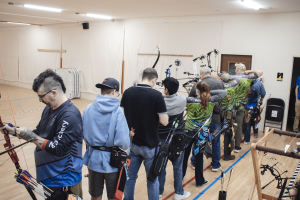
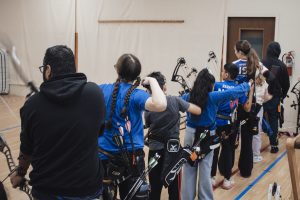
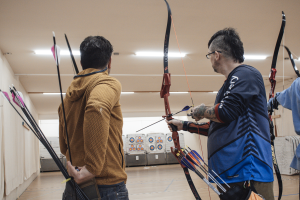
Join us for two days of competitive archery — the Washington State Outdoor Target Championship and the PNW Open. Whether you’re chasing a state title or just looking to compete in a fun, inclusive format, there’s a place for you on the line.
The Washington State Target Championship will feature a 72-arrow qualification round where Washington state residents can compete for state rankings, but all archers are invited to compete for medals in a guest division.
The PNW Open is an inclusive bracket open to everyone to experience a National-level tournament in the friendly Pacific Northwest. All participants can enjoy a full day of shooting and exciting head-to-head matches, gaining valuable experience. The top two qualifiers in the Senior and primary JOAD divisions will end the day in head-to-head gold medal matches.
Out of State Participation is encouraged!
Event Details:
Day 1 — Saturday, June 6: Washington State Outdoor Target Championship
Compete for your state title in a single-day, 72-arrow qualification round. Results will be tallied immediately following the shoot, with a medals ceremony held the same day.
Check-in and equipment inspection: 7:30 a.m.
Start time: 9:00 a.m.
Day 2 — Sunday, June 7: PNW Open
The PNW Open uses a non-elimination Swiss Style bracket format — meaning every archer shoots all day, no matter what. All divisions will compete through the full bracket, with medals awarded for each division at the close of competition.
Rules for Swiss Style tournaments can be found with the full event rules or refer to the FAQ below for questions.
Start time: 9:00 a.m.
Registration & Pricing
Registration has closed for 2026.
Washington State Outdoor Target Championship Results:
Standings and bale assignments are available on Between Ends.
PNW Open Live Results:
Event Notes:
- Depending on registration numbers, we may run two shooting lines.
- Questions? Contact us at tournaments@nextsteparchery.org or (425) 312-3345.
Additional Information
Q&As
What is a Swiss Style tournament?
It’s a method of running a tournament that strikes a balance between a single elimination format and round robin. Running a single elimination tournament can be fast, but has an issue where half the participants will only shoot a limited number of arrows. Round Robin allows everyone to shoot the entire time, but can take a long time to resolve and requires everyone to shoot a large number of matches. Swiss Style is non-elimination, but archers will generally shoot against those of their same skill level, allowing the tournament to resolve as quickly as one with double elimination.
What do you mean by non-elimination?
Each archer will shoot a full day of head-to-head matches during the tournament, rather than possibly being eliminated at some point during it.
Why did you decide to run a tournament like this?
National events typically have one day of qualifications followed by one day of head-to-head matches. Running a local or regional tournament with head-to-head matches can be challenging as everyone wants to experience two full days of shooting, but we feel that getting good experience in the head-to-head format is critical for being able to compete at a national level. To help ensure that the PNW creates some of the best archers in the country, we decided to try a format that can satisfy both goals.
Is this format used anywhere else? How did you hear about this?
Running a swiss style competition is rather common in chess, card games and video game tournaments.
How does match scoring change?
It doesn’t! Recurve and Barebow will still shoot using a set scoring system, and Compound will continue to use a cumulative scoring system. All styles will use USA Archery rules for scoring, just like at a national event. The only difference is how the tournament bracket is run.
If there are no eliminations, how will I be ranked?
Since no-one is eliminated, we use several different metrics to determine everyone’s rank. The first, and most important, is your win-loss record. Then, for anyone with the same record, we will look at wins within that same record.
For example, three archers (A, B and C) all have a 5-2 record. A won against B and C, while C won against B. The three archers will be ranked A, C, B within their win-loss record.
If two or more archers are tied by their relative score, then the next level of tiebreaker is the records of all of their opponents. This ensures that archers who maintained a record against stronger opponents will be ranked higher than those who did not.
For example, two archers (A and B) have a record of 5-2 and both won a game against C who is also 5-2. The records of their opponents are compared, where A’s combined total is 11-3 and B’s is 10-4. A had stronger opponents, and will be ranked higher.
Finally, if two or more archers are still tied, their match scores are compared.
For example, two archers (A and B) have a record of 5-2, and are tied through the other tiebreakers. A has a total set score of 26 (winning 6-0 for all wins and losing 6-4 for both losses) and B has 6 (winning 6-4 for all wins and losing 6-4 for both losses). A had more decisive victories and will be ranked above B.
Does my qualification score even matter?
It does! Your qualification score will determine your initial seeding in the head-to-heads, such that higher seeded people will generally meet later in the tournament. So, just like a standard elimination tournament, having a higher qualification round will give you an advantage in the first few rounds of the tournament.
Hotel Information
Coming from out of town and looking for places to stay? View the Hotel at the link below to see the best deals:
Media
Download the flyer to share with your local ranges:

Event Sponsors